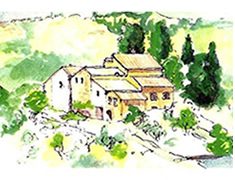
As autumn settles over the hills of Fiesole, looking out across the fog-shrouded valley toward Florence, the air turns crisp and sharp. In these rolling Tuscan landscapes, October and November mark a sacred ritual: la raccolta, the olive harvest.
To standard commercial producers, making olive oil is a high-volume agricultural industry. But to small, family-run estates—like the Mancini family on their steep terraced farm high above the Arno river—it is an art form driven by passion, obsession, and precise science.
Achieving true Tuscan extra virgin olive oil (Olio Extra Vergine d'Oliva, or EVOO) requires balancing centuries-old traditions with cutting-edge technology. It demands a delicate interplay of hand-harvesting patience and high-tech, computerized extraction to capture that legendary emerald-green hue and peppery, vibrant kick.
Step 1: La Brucatura – The Harvest of Patience
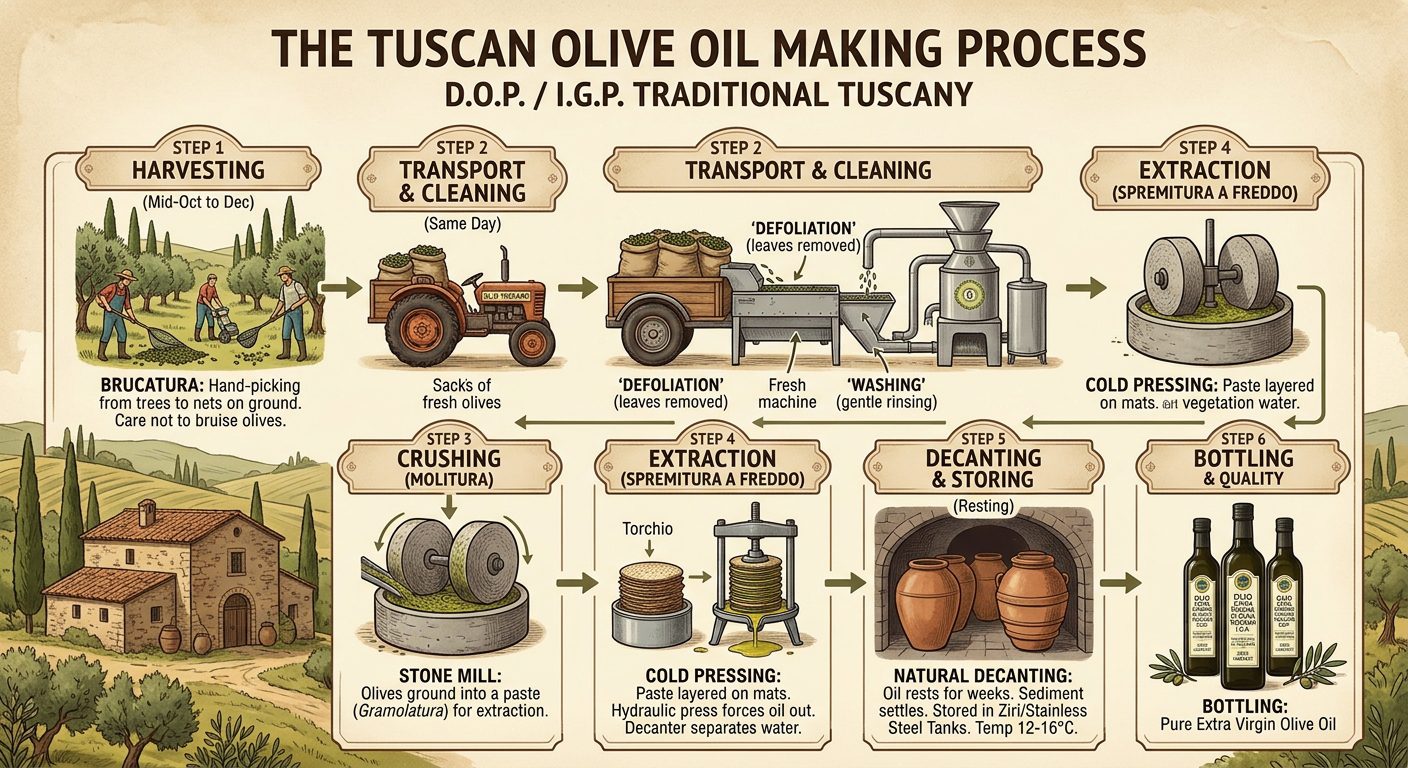
Every year between mid-October and early December, the Mancini family wakes before dawn. The olive trees—primarily Frantoio, Moraiolo, Leccino, and Pendolino cultivars—stand heavy with fruit turning from bright green to deep purple, a stage known as invaiatura (veraison).
Unlike industrial groves that use mechanical shakers to violently strip trees, small Tuscan estates rely predominantly on brucatura—hand-picking. Workers gently rake the branches using lightweight handheld pneumatic combs (abbacchiatori), or by hands, letting the olives tumble into soft mesh nets (reti) spread wide across the terraced earth below.
"The olive is like a delicate berry," explains Sofia, "If you drop it hard, bruise it, or leave it sitting on the damp earth, oxidation starts immediately. Broken skin releases enzymes that raise the free fatty acidity (acidità libera), ruining the oil before we even reach the mill."
Care is taken at every movement. Bruised fruit leads to elevated oleic acid levels and defective off-flavors, such as fustiness (riscaldo) or mustiness. The harvested olives are carefully swept into rigid, perforated plastic crates that allow air circulation, preventing the fruit from crushing under its own weight or generating heat.
Step 2: Il Trasporto e la Defoliazione – The Race Against the Clock
In the world of premium olive oil, time is the ultimate adversary. To produce oil with exceptionally low acidity—often under 0.2%, far stricter than the official European EVOO limit of 0.8%—the olives must be milled within hours of being picked.
By early afternoon, tractor trailers loaded with crate after crate make their way down the winding roads to the local frantoio (olive mill).
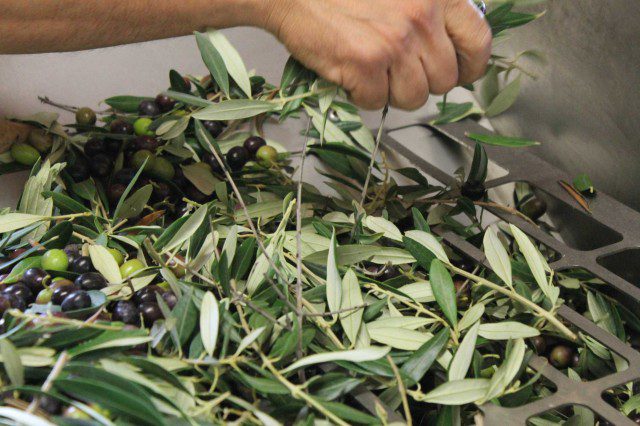
Upon arrival, the batch undergoes immediate preparation:
- Defoliation (Defoliazione): The olives pass through a hopper with a high-velocity air fan that strips away stray leaves, twigs, and debris (defogliatrice). While a few green leaves add a pleasant herbaceous aroma, too many impart a harsh, astringent bitness.
- Washing (Lavaggio): The fruit enters a gentle stainless-steel bath where ambient-temperature water rinses away dust, soil, and field residue before passing over a vibrating grid to drain completely.
Now cleaned and dry, the green gems are ready for mechanical extraction (estrazione meccanica di alta qualità).
Step 3: Moltura e Gramolatura – Where Precision Meets Polymerization
Past traditional methods relied on massive granite millstones (macine) open to the air. While iconic, open stone mills expose the olive paste to oxygen and ambient warmth, causing rapid oxidation and loss of volatile aromas. Modern Tuscan artisan producers rely instead on fully sealed, computerized stainless-steel equipment.
The Milling (Moltura)
The olives enter a modern disc or hammer mill (frantoio a martelli). Spinning at high speeds, the stainless steel hammers crush the entire olive—skin, pulp, and pit—into a dark, aromatic paste (pasta d'olive). The crushed pits actually serve a crucial purpose: their sharp fragments help break down the micro-droplets of oil trapped inside the fruit cells.
The Malaxation (Gramolatura)
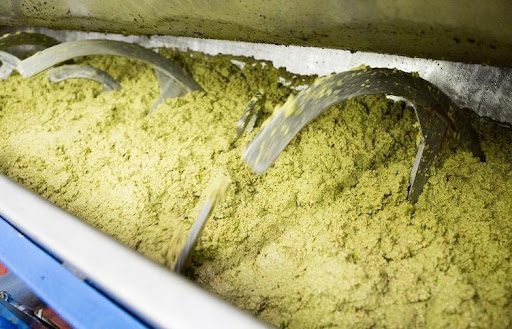
From the hammer mill, the paste is pumped directly into closed, horizontal troughs known as malaxers (gramolatrice orizzontale) equipped with rotating stainless-steel screws.
This step, gramolatura, is the heart of the modern extraction process. Slow, continuous stirring breaks the emulsion formed during crushing, allowing microscopic oil droplets to merge into larger drops that can be mechanically separated.
This is where the strictly monitored cold extraction (estrazione a freddo or spremitura a freddo) occurs:
- Temperature Control (Controllo della Temperatura): Computerized sensors and water jackets wrap around the malaxation tanks, ensuring the paste never exceeds 27°C (80.6°F).
- The "Cold" Trade-off: Heating the paste above 27°C would yield significantly more oil, but heat destroys the delicate polyphenols (antioxidants) and cooks off volatile aromatic compounds like hexanal (responsible for the smell of fresh-cut grass and artichoke). Keeping it sotto i 27°C guarantees a lower yield, but yields extraordinary quality.
- Inert Gas Protection: Advanced mills inject nitrogen (azoto) into the sealed tanks to blanket the paste, completely blocking oxygen exposure during the 20 to 30 minutes of stirring.
Step 4: Estrazione Centrifuga – The Modern Decanter
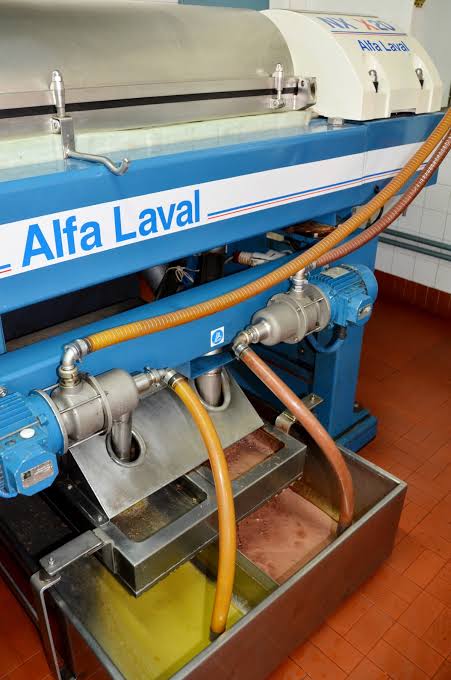
Once the paste has been perfectly kneaded, it is pumped into a high-speed horizontal centrifuge, known as a decanter (decanter centrifugo).
Spinning at several thousand revolutions per minute (RPM), the decanter uses centrifugal force to separate three elements of varying densities:
- Olive Oil (Olio): The lightest phase, exiting near the center axis.
- Vegetation Water (Acqua di Vegetazione): The natural water contained within the fruit.
- Pomace (Sansa): The solid residue composed of skins, pulp, and pit fragments.
Modern two-phase or ecological three-phase decanters require little to no added water, preserving water-soluble polyphenols that give Tuscan oil its signature peppery tickle in the throat (pizzicore) and healthy antioxidant profile.
Out of the decanter's spout flows a stream of thick, fluorescent, bright neon-green liquid: olio nuovo (new oil).
Step 5: Chiarificazione e Stoccaggio – Resting in the Dark
The newly extracted oil still contains tiny traces of fruit moisture and suspended microscopic solids. To remove these without heat or chemical solvents, it passes through a vertical centrifugal separator (separatore verticale) for a final, rapid polishing.
From there, the liquid gold moves to the dark, temperature-controlled cellar (cantina) for storage (stoccaggio).
In years past, Tuscan farms kept oil in large terracotta jars called ziri. While picturesque, terracotta is porous and difficult to sanitize. Modern quality standards require temperature-controlled stainless-steel tanks (serbatoi in acciaio inox):
- Constant Climate: The cellar is held at a steady 12°C to 15°C (53°F to 59°F). Heat degrades oil, while cold below 10°C causes it to congeal and solidify, breaking the delicate chemical balance.
- Nitrogen Sparging (Stoccaggio sotto Azoto): Tanks are sealed with a top-layer of inert nitrogen gas to displace oxygen, preventing oxidation and preserving freshness for over a year.
- Decanting (Decantatura Naturale): Over a few weeks, any remaining fine particles settle naturally to the bottom (morchia) and are drawn off to prevent off-flavors. Some producers choose gentle paper filtration (filtraggio) to ensure maximum stability and clarity before bottling.
Step 6: Imbottigliamento e Controllo Qualità – The Final Seal
Before a single drop of the Mancini family's harvest can reach the clients, it must pass rigorous testing:
Chemical Analysis (Analisi Chimica)
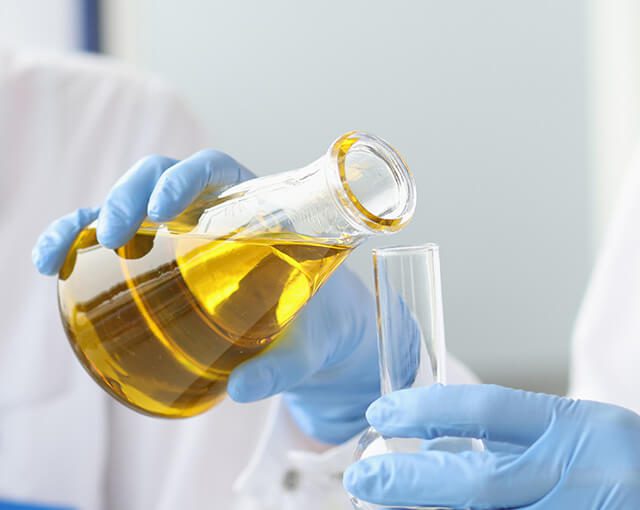
Laboratory testing verifies the oil's purity and chemical metrics:
- Free Acidity (Acidità Libera): Must be well under the standard threshold, ideally below 0.2%. Low acidity indicates healthy, undamaged fruit processed immediately after picking.
- Peroxide Value (Numero di Perossidi): Measures initial oxidation levels. Low peroxides (< 10 mEq O2/kg) confirm the oil was kept away from heat and oxygen during extraction.
- Polyphenol Content (Polifenoli): High counts (> 300 mg/kg) confirm rich antioxidant levels, responsible for bitterness, pungency, and long shelf life.
Organoleptic Panel Test (Esame Organolettico)
An official tasting panel evaluates the sensory profile, scoring three mandatory positive attributes:
- Fruity (Fruttato): Fresh notes of green tomato leaf, artichoke (carciofo), and cut grass.
- Bitter (Amaro): A pleasant bitterness on the tongue from healthy green olives.
- Pungent (Piccante): A spicy, burning sensation in the back of the throat caused by high oleocanthal levels.
Once certified, the oil is filled into dark glass bottles or tin containers designed to shield it from ultraviolet light (imbottigliamento).
The Heartbeat of Tuscan Oil Making
When you uncap a bottle of fresh Tuscan extra virgin olive oil and pour a ribbon over warm, toasted sourdough (fettunta), you are tasting far more than an ingredient.
You are tasting weeks of backbreaking labor on steep terraces, the cold morning air of Fiesole, the nervous anticipation as the decanter starts to spin, and the triumph of a family preserving centuries of heritage through state-of-the-art precision.
It takes raw dedication, relentless timing, respect for the land, and an unyielding commitment to perfection. From tree to bottle, it is the true soul of Tuscany—bottled in green liquid gold.